"Our Pain is Real, but It Will Not Prevail!"
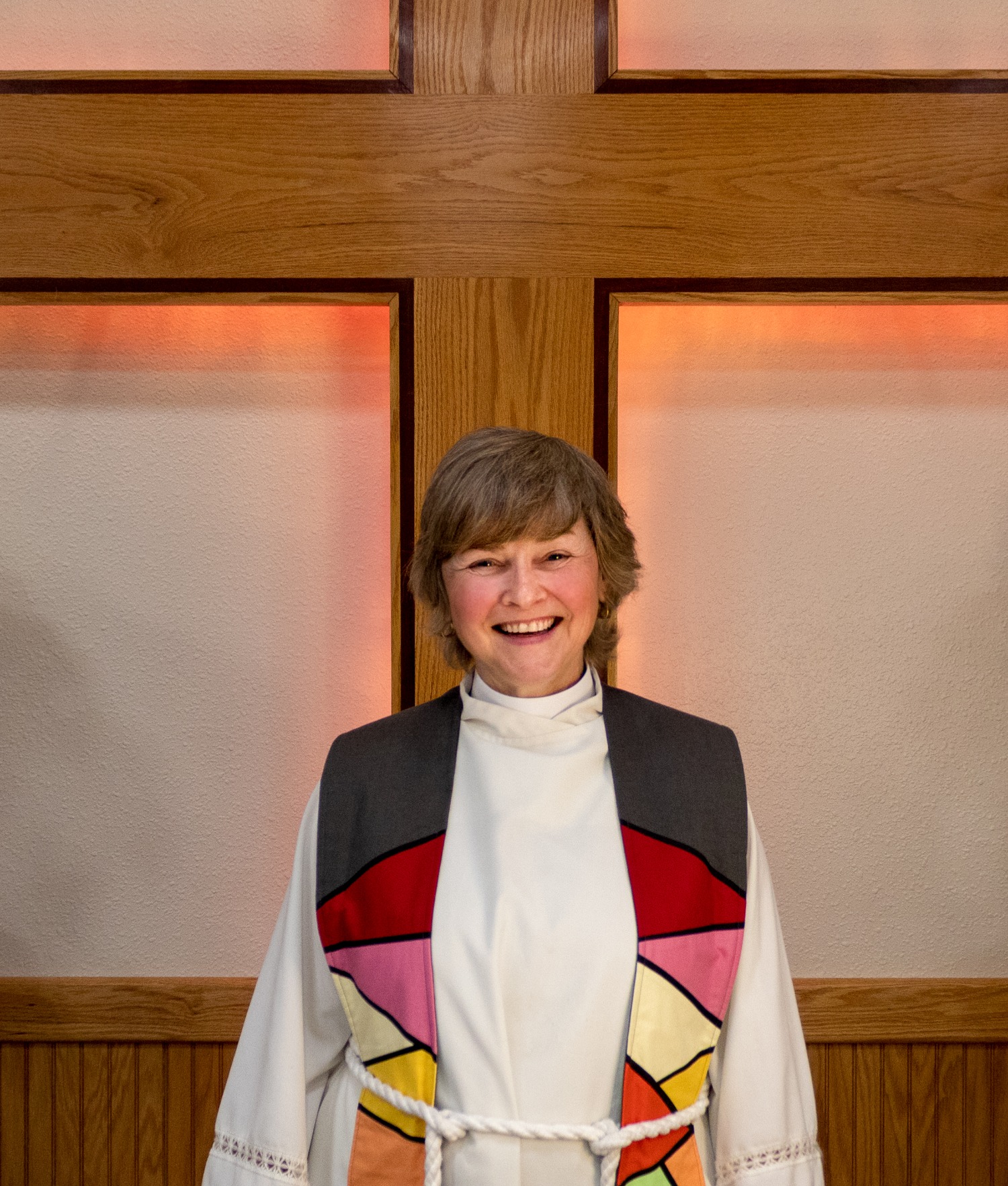

One day last week, I was driving through Barlow on my way to an appointment. I was almost at the stoplight at the intersection of Highway 99 when suddenly the bells began to clang and the railroad crossing bars came down. I rolled my eyes and sighed - as one does! - and thought to myself, "If only I'd been five minutes earlier! Grr..." Then I settled back in my seat to wait, hoping it wouldn't be a long train. Since I was right up front at the crossbars, I had a perfect view of all the freight cars. With mild interest, I noticed that many of containers were stacked on top of each other. Some of the cars had the usual indecipherable graffiti on them, but there was one that caught my eye and made me sit up. It said this: "It doesn't matter who we are. What matters is our pain...." "Wow!" I thought. "I'm not always a big fan of graffiti, but I'll make an exception for that bit of prophetic wisdom!" And then the crossbars lifted, and I continued on my journey, with a favorite line from an old Simon and Garfunkel song running through my head: "The words of the prophets are written on the subway walls and tenements halls...." "Yep!," I nodded to myself, "AND sometimes the words of the prophets are written on the sides of freight cars we encounter as we're going about our day!..." "It doesn't matter who we are. What matters is our pain "
Pain is universal. It's something every living being on this earth experiences. And THAT's why it matters! Later I'll touch on the pain of our more-than-human neighbors, but I'd like to begin by speaking about our own human pain because that's the proverbial elephant in the room - right here AND wherever you and I go. As I look out at all of you, and as I think about Zoar's homebound folks, I remember visits and conversations and crises, and I'm aware that we're all afflicted with different types and varying degrees of pain. Indeed, each of us carries our own unique blend of pain. Sometimes our pain can be healed or at least managed, but there are also times when our pain has become chronic and debilitating, turning our lives upside down and inside out.
When we hear the word "pain," we tend to think in terms of physical pain, but pain can also be psychological, emotional, or spiritual. So, I want to name a few common sources of pain, in the hope that you will realize your pain matters Grief and fear and the sin that causes us to break relationships are sources of deep pain. So are anxiety, depression, and other forms of mental illness. Addiction, which often begins in an effort to numb our pain, almost always ends up causing more pain both for those who are addicted and for their loved ones. In addition, there are also some among us who suffer from the debilitating effects of guilt and shame and PTSD, as we carry the unseen, yet ever-present wounds of physical, emotional, and spiritual abuse. And then there's the pain of watching a loved one suffer and knowing you can't fix the problem, and that's one of the most difficult kinds of pain.... As I ponder all this, I'm pretty sure that a number of us here today could tick the boxes for ALL the various kinds of pain: physical, psychological, emotional, and spiritual.
So, here are a few things you and I should keep in mind with regard to pain: For one thing, it's important to remember that our culture teaches us to hide our pain, so that we're not perceived as "weak." As a result, the pain you and I bear often can't be seen by others, and the reverse is also true, meaning that you and I often can't see the pain others bear. Another thing about pain: No matter what form it takes, it shapes who we are, and it colors how we see the world. In fact, there are times when our pain may become so debilitating and all-consuming that it causes us to turn away from others and focus exclusively on ourselves. And when you and I turn inward with a laser focus on our own pain, it becomes still harder for us to see the pain of our neighbors. As our hearts become ever more hardened, we may even end up dissing and dismissing the pain our neighbors are experiencing because we've come to believe our own pain is all that matters.... I wonder: Can you see how dangerous this is? When you and I get to the place where our own pain is festering and eating away at us, it won't be long until we begin to lash out, blaming and/or hurting others....
Friends, I think this tendency to focus on one's own pain while blaming and shaming others is one of the biggest problems in our world today. And I'm convinced it breaks God's heart because when we human beings look at others with contempt and dismiss their pain, we're certainly not seeing one another as God sees us: with eyes of love and a heart of compassion .... I'm reminded of something Father Richard Rohr of the Center for Action and Contemplation frequently says, "Hurt people hurt other people. We must learn to transform our pain, so that we don't transmit it to others "
While Father Richard is obviously talking about the pain we inflict on fellow humans, it's also true that we humans inflict pain on God's creation through both the things we do and through the things we fail to do. Our harmful action and inaction stand in opposition to the call of Jesus: As disciples of Jesus, we, who've freely received God's gift of healing and new life, are called to freely offer that same gift of grace to others - and that includes both our human and our more-than-human neighbors. BUT again, we can only bring healing to others if we've first tended to the healing of our own wounds....
Friends, when you and I dare to raise our heads and look around at our world, we quickly find that we're not alone in our pain: There are so many people, so many creatures, so many plant species, and so many places groaning in pain and longing for healing.... It doesn't matter who they are or what they are. What matters is their pain,...which is also our pain Our individual and collective pain matters because our loving Creator hears the groaning and sees the overwhelming pain of this beautiful, yet oh-so-broken creation. And God wants nothing more than to bring healing and new life to all the children of earth - human and more-than-human. Again, "it doesn't matter who we are. What matters is our pain." Our pain matters because we are ALL beloved by God, who wants us to be healed in body, mind, and spirit, so that we may experience God's new creation and come to know the deep and abiding joy of abundant life....
As I was preparing to preach this week, it struck me: THAT'S precisely the message Jesus relays in the reading we just heard from Matthew 9. There's a whole lot of healing going on in these 14 verses, so let's a closer look at what Jesus is up to!... So, when we meet up with Jesus in today's reading, he's taking a walk in Capernaum when he sees a man named Matthew sitting at the tax booth. Jesus immediately calls Matthew to come and be his disciple, and without missing a beat, Matthew gets up and begins following Jesus.... As we consider this story in the wider context of the gospels, we realize that when Jesus looks at Matthew, he sees something more than a tax collector in a booth. Personally, I think Jesus sees both Matthew's pain and his potential..... The fact that Matthew doesn't hesitate to get up and follow Jesus tells us he's ready to leave his old way of life behind. Maybe he's tired of the pain of being hated by his neighbors because he's been working for the oppressive Roman regime. Whatever the reason, he jumps at the chance to follow Jesus on the path to new life. And in the next three verses, we learn that apparently Jesus has been seeing the pain and potential of many other tax collectors and sinners! We know this because the narrator tells us in verse 10 that many of these folks have been invited to dinner with Jesus. In verse 11, the Pharisees, who are high-ranking religious authorities, find out about the questionable company Jesus is keeping, and they ask his disciples, "Why does your teacher eat with tax collectors and sinners?" Jesus himself replies, saying that he's come to bring healing for those who need it. He also reminds these religious authorities that God doesn't care about ritual sacrifices; instead, God wants God's people to show mercy to anyone in need of healing.
Moving on to verse 18, we learn that while Jesus is still talking to the Pharisees, a synagogue leader comes and kneels before him, asking Jesus to come and restore his dead daughter to life. In contrast to the Pharisees, who are seeking to blame and shame and hurt others, the father of the girl expresses his faith and trust in Jesus, asking for healing and new life for his daughter. Immediately, Jesus and his disciples get up from the table and begin following this man to his house! As they're walking along, a woman who's been suffering from a flow of blood for twelve years stealthily comes up behind Jesus and touches the fringe of his cloak. Like the father of the girl, she has great trust in Jesus's ability to heal. But unlike the father, she is a person who would be labeled "unclean" in her society because of her gender and her flow of blood. Therefore, she's also considered "unworthy" of approaching Jesus and asking for healing And yet she is clearly a person of deep faith and courage, who desperately longs to be healed, so she dares to take for herself the healing she needs.... Did you notice that when Jesus turns and sees her, he doesn't scold or shame her? Instead, he looks at her with eyes of love and sees her for who she really is: a person of great faith and courage. He sees her as a beloved child of God, who is worthy of healing of new life. We know this because Jesus calls her "daughter," saying to her, "Take heart, daughter; your faith has made you well...." Then he continues on his way to the home of the synagogue leader, where he ignores the jeering crowd and proceeds to raise the girl up and restore her life. Wow - quite the day in the life of Jesus!
Now, let's take a step back and look at these healing stories through a twenty-first century lens. Matthew the tax collector is someone who is despised by his neighbors because he earns a lucrative living by doing the bidding of an oppressive Roman regime. The modern equivalent might be the ICE officer who signs up for the government's $50,000 bonus and then proceeds to pull immigrants out of their houses, only to regret his decision once he finds that he's become a target of his neighbors' angry protests. Jesus, who sees on the heart, sees this man's pain and declares him worthy of healing and new life! That should give us pause, as well as hope that God can and will change hearts that have become hardened ... Now let's look at the synagogue leader who comes to Jesus. He's a person of faith who has some wealth and power and influence in his community. He's also a father who dearly loves his daughter. When Jesus sees him, he acknowledges that this man's pain also matters and that he and his daughter are worthy of healing and new life. Perhaps the modern equivalent of the synagogue leader and his daughter might be a pastor and their child -- As for the woman with the flow of blood, who takes a great personal risk to get what she needs, I think one powerful contemporary example would be our LGBTQ siblings in faith who for so long weren't able to participate fully in the life of the church because they were considered "unclean" and "unworthy." And yet some of them found ways of staying engaged and remaining active in their faith. In a recent "Working Preacher" podcast from Luther Seminary, Dr. Cody Sanders observes that beginning in the post-World War II years and continuing through the 1960s and on up to the present, our queer siblings in Christ have courageously found ways of taking what they needed for their own healing, as they created safe spaces where they and their communities could gather and worship together .... My friends, I have no doubt that Jesus has said and continues to say to each and every one of his LGBTQ followers the very same words he speaks to you and me and to all of God's children: "It doesn't matter who you are. What matters is your pain. AND what matters is that God sees your pain and wants you to come home and be healed. Take heart, dear child of God; your faith has made you well, and nothing can ever separate you from my love!"
Thanks be to God! Amen.
Our Pain is Real, but It Will Not Prevail
